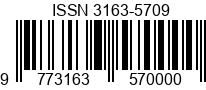
ISSN
QUICK LINKS
TOOLS

TEMPLATE
COLABORATION WITH


Industries: Journal of Halal Industry Development is a peer-reviewed scientific journal published by CV. Branded Tech Indonesia. The journal has been published since January 2025 and is issued twice a year (May and November). Industries: Journal of Halal Industry Development provides a scholarly platform for publishing high-quality research related to halal industry development, including halal food and beverages, halal tourism, halal lifestyle, halal education, halal management, halal certification, Islamic business practices, and other theoretical or applied studies related to the halal ecosystem.
We accept manuscripts that fit the aims and scope of the journal. Authors must ensure that submitted manuscripts comply with the journal’s technical requirements and academic publication ethics. Manuscripts must follow the official journal template and be written clearly in academic English. Submissions that do not comply with these requirements may be rejected before entering the peer-review process. Authors are encouraged to read the author guidelines, article template, and publication ethics carefully before submission.
Authors are required to submit three files during the submission process: (1) an anonymous (blinded) manuscript without author names, affiliations, or identifying information in the main document; (2) a title page containing the manuscript title, author names, affiliations, corresponding author email address, and ORCID ID if available; and (3) a cover letter explaining the originality, novelty, and contribution of the manuscript. Authors must also confirm that the manuscript complies with all submission requirements and that it is not being considered for publication elsewhere.
Submitted manuscripts must be original research papers. Review articles are accepted only if they are based on a systematic literature review (SLR) approach. Manuscripts should be written in English and contain between 4,000 and 8,000 words, including tables, figures, references, and appendices. Manuscripts must be prepared in .doc or .docx format using A4 paper size (21 × 29.7 cm) with 2.5 cm margins on all sides.
The manuscript should use Arial Nova Light font with single spacing. The main text should be written in 11 pt font size, section titles in 12 pt bold, abstracts in 10 pt, and tables or figures in 9 pt. Paragraph spacing should be set at 6 pt. The manuscript should consist of clearly separated sections and should not use automatic numbering for sections or subsections.
The structure of the manuscript consists of the title, abstract, introduction, literature review, methods, findings, discussion, conclusion, acknowledgement (optional), and references.
The title should be concise, informative, and relevant to the manuscript topic without containing uncommon abbreviations and should not exceed 20 words.
The abstract must provide a concise summary of the manuscript and should be structured using the following sub-headings: Objective, Research Design & Methods, Findings, Research Implications (if applicable), Practical Implications (if applicable), Social Implications (if applicable), Recommendations (if applicable), and Contribution & Value Added.
The abstract should not exceed 250 words, including keywords and Journal of Economic Literature (JEL) Classification, and should be written using Arial Nova Light 10 pt font. Authors should avoid the use of personal pronouns in both the abstract and the body of the manuscript.
The introduction should explain the background and context of the study, present the research objectives or hypotheses, highlight the research gap and novelty, and briefly discuss relevant previous studies.
The literature review should provide a critical review of relevant theories and previous research related to the topic.
The methods section should clearly explain the research design, data collection procedures, sampling techniques, instruments, and data analysis methods used in the study.
The findings section should present the research results clearly and concisely.
The discussion section should interpret the significance of the findings and relate them to relevant theories and previous studies rather than merely repeating the results.
The conclusion should summarize the major findings and contributions of the study and may also include research implications, limitations, and recommendations for future research.
The acknowledgement section, if included, may contain acknowledgements to sponsors, institutions, or contributors who supported the research.
References must follow the American Psychological Association (APA) 7th Edition citation style. Authors are strongly encouraged to use reference management software such as Mendeley.
The reference list must contain at least 20 scholarly references, including a minimum of 5 references indexed in Scopus or Web of Science. Recent references published within the last five years should be prioritized. Non-English references should not exceed 20% of the total references unless the study is country-specific. Manuscripts relying mainly on local or non-English references may be rejected.
All submitted manuscripts undergo a double-blind peer-review process to ensure academic quality, originality, and relevance to the scope of the journal.
Publisher : CV. Branded Tech Indonesia
Kemkumham Nomor : AHU-0057511-AH.01.14 Tahun 2023
Jl Raya Bantaran No 77 Dusun Krajan RT 002 RW 001, Desa/Kelurahan Tempuran, Kec.
Bantaran, Kab. Probolinggo, Provinsi Jawa Timur, 6726 Indonesia
www. www.brandedtechpublisher.biz.id | e-mail : brandedtechindonesia@gmail.com

Copyright: © by the authors. Submitted for possible open access publication under the terms and conditions
of the Creative Commons Attribution-ShareAlike 4.0 International (CC BY-SA 4.0) license Creative Commons Attribution-ShareAlike 4.0 International License.